



 © Gage Skidmore flickr.com
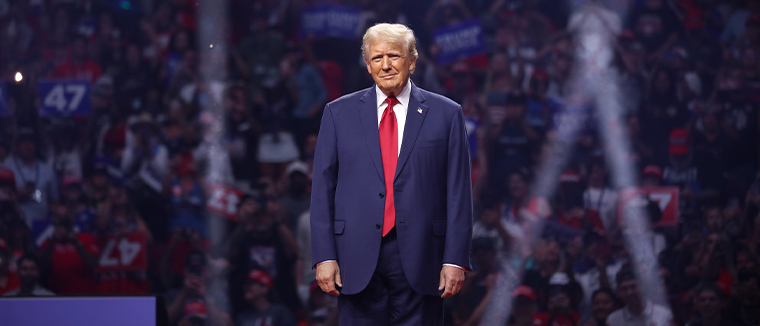
The re-election of former US President Donald Trump has opened the door for significant shifts in the TSCA programme and the nation’s management of industrial chemicals.
With control of the White House, the incoming administration could be well positioned to enact changes sought by industry since the 2016 TSCA reforms, including faster reviews of new chemicals, more narrowly focused risk evaluations and lower programme fees.
Should Republicans assume control of both chambers of Congress, changes could also come through legislative reforms to TSCA. Amendments to the law could lock in long-lasting alterations to how chemicals are regulated in the US and be difficult for future administrations to reverse.
Environmental groups, however, have signalled that they are ready to push back. NGOs are promising legal fights at every turn, and after the Supreme Court overturned Chevron deference earlier this year, they could have a greater chance of reversing agency decisions in the courts.
Meanwhile, the 2016 TSCA amendments did little to slow the work of US states in imposing their own regulations on chemicals of concern. Any perception of federal inaction could drive further policy developments at the local level.
All told, the election promises to usher in big shifts to US chemical regulations and continued policy swings for businesses to navigate.
‘Day one’ changes
President-elect Trump began a deregulatory push from his earliest days in office in 2017, and a similar initiative in 2025 could put a variety of chemical-related issues in the crosshairs.
Project 2025 – a blueprint for a conservative government assembled by the right-leaning Heritage Foundation – calls on the incoming president to issue a first-day executive order establishing "pause and review" teams to scrutinise EPA actions.
The plan describes how these teams should identify any existing rules to be put on hold or reproposed, and it recommends a variety of changes specific to the agency’s chemicals office (see box).
Although the president-elect distanced himself from Project 2025 during the campaign, its call to reassess past policies – including scrutiny of chemical rules – is not unusual.
On his first days in office in 2021, President Biden issued an executive order directing the EPA to review and consider rescinding regulations and policies issued during Trump’s first term, highlighting specific TSCA rules to reassess. Ultimately, that effort resulted in revisions to the TSCA rule for persistent, bioaccumulative and toxic (PBT) substances, an overhaul to the risk evaluation ‘framework’ rule, and a wholescale reimagining of TSCA risk evaluations.
If President-elect Trump follows the same playbook, major reworks could lie ahead for TSCA risk management rules, chemical risk evaluations, and framework rules that only recently were overhauled.
Future trajectory
But the specifics for how the Trump administration could reshape TSCA’s rules and policies remain an open question.
David Fischer, counsel at Keller and Heckman and deputy assistant administrator for the EPA's Office of Chemical Safety and Pollution Prevention (OCSPP) in the first Trump term, says "significant changes are in store" for the TSCA programme, including for new and existing chemicals.
TSCA risk evaluations will become more limited in scope, he said, and risk management rules will no longer be based on the EPA’s current view that ‘unreasonable risk’ means essentially "any risk".
It will take some time to get new appointees in place and to determine priorities, Fischer says. But unlike under the first Trump term, there has been "significant prep work over the last many months, including identifying scores of potential appointees".
Meanwhile, Michael Boucher, a partner at Steptoe, says his reaction to a second Trump administration "is to expect less". That means less of what regulated parties do not want – namely "‘burdensome’ regulations of questionable benefit" – but also less of the quick and transparent chemical approvals they desire, he says.
Maria Doa, senior director of chemical policy at the Environmental Defense Fund (EDF) and a former EPA official, says the incoming administration will "systematically weaken" the TSCA programme by returning to a "science-adverse approach".
Under President Trump, she says, the EPA will disregard and systematically underestimate unreasonable risks for both new and existing chemicals, fail to use TSCA’s testing authority to fill data gaps, and develop risk management rules that do not adequately address risks to susceptible groups.
Lynn Bergeson, managing partner of Bergeson & Campbell, says it is likely there will be a return to the first Trump administration’s overarching approach toward implementing TSCA.
With that said, the specific direction of the TSCA programme will depend heavily on what industry stakeholders push for. Advocating "a reckless abandon" of the Biden-Harris approach for the programme, she says, would be "ill advised (to me anyway) and short-sighted".
"Industry needs a legally defensible TSCA programme that is predictable and based on the law," she says. The way to achieve that is through "discipled realignment of TSCA implementation and getting OCSPP the resources it needs to process new chemicals timely".
"Tossing a grenade into the mix does no one any good," she says.
NGOs prepare
Whatever path lies ahead, environmental activists have pledged to fight changes that weaken chemical protections, including by taking the EPA to court.
"We will continue to focus on addressing risks to those more susceptible and highly exposed and advocating for strong protections on toxic chemicals," Dr Doa says.
Kizzy Charles-Guzman, CEO at the Center for Environmental Health (CEH), says the organisation is ramping up its work to defend the public’s right to safer products and a healthy planet.
"We sued the Trump administration many times for failing to protect public health," Charles-Guzman says. "We vow to accelerate our work toward systemic change in our world over the next four years."
Manish Bapna, president of Natural Resources Defense Council (NRDC), says the organisation filed 163 cases against the first Trump administration and won victories in nearly 90% of those lawsuits.
If the president-elect fails to faithfully carry out federal laws, "we have the constitutional right to petition our courts to compel him to do so – and we’re prepared to do just that", Bapna says.
Environmental law firm Earthjustice shared a similar sentiment, noting that it filed an unmatched number of lawsuits to protect the environment during the first Trump administration and it is ready to do so again.
While Republicans may have a strategy outlined in Project 2025, "we just happen to have our own playbook", Earthjustice says.
Legislative amendments
Complicating the picture is the potential for legislative reforms to TSCA. Amending the law was unfeasible in the past due to partisan gridlock, but doing so could be viable under a Republican-controlled Congress.
Last year, the American Chemistry Council (ACC) said it is open to "surgical tweaks to TSCA that will fix it". And while the trade group has been tight-lipped about what those specific changes might entail, House Republicans offered some signals of priorities in a budget report released earlier this year.
The House report sought changes related to the EPA’s role in regulating the workplace, establishment of existing chemical exposure limits (ECELs) that are lower than background levels or detection limits, and reliance on assessments prepared under the EPA’s Integrated Risk Information System (IRIS) programme.
Lawmakers also called for modifications to the new chemicals programme, with an emphasis on completing reviews within the 90-day statutory timeframe, increased transparency about the status of submittals, and narrowed evaluations that focus on a substance’s intended use.
Bergeson and Fischer both say they think TSCA reform legislation is a possibility under the new Congress. Meanwhile, Dr Doa at the EDF says she anticipates the introduction of a bill to remove the requirement for the EPA to make an affirmative safety determination for a new chemical before it can be commercialised.
In a statement responding to the election results, ACC president Chris Jahn said the trade group is "ready to work closely with the Trump Administration and members on both sides of the aisle in Congress to champion science-based policy solutions across all levels of government".
Countdown to 20 January
For now, the Biden administration has roughly 75 more days to advance its policy priorities before Inauguration Day on 20 January.
In that time, the EPA could be "tempted to push initiatives out the door as quickly as possible", Bergeson says.
Doing so would match past precedent. Between the 2020 election and President Biden’s inauguration, for example, the Trump administration finalised six of the ‘first ten’ risk evaluations, threw out three Obama-era proposals, and adopted the PBT rule that the Biden administration would go on to scrutinise.
If the current administration makes a similar term-end push, that could mean issuance of final risk management rules for the solvents trichloroethylene (TCE), carbon tetrachloride, and perchloroethylene (Perc), proposed risk management rules for other ‘first ten’ chemicals, additional reporting rules, the designation of new high-priority chemicals, and a final rule updating the new chemicals procedural regulations.
The EPA could also push out draft and final risk evaluations for a number of substances. As part of a proposed court agreement, the agency already said it would issue draft risk evaluations for seven substances and finalise reviews of five others by the year’s end, including for the high-profile substance formaldehyde.
Nonetheless, the agency remains short on resources and is already engaged in litigation over multiple rules adopted earlier this year.
Moreover, any of the agency’s work will be reviewed by the incoming Trump team, said Fischer, and that could dampen agency enthusiasm for finalising evaluations and risk management rules.
According to Bergeson, the incoming Trump administration could battle back Biden initiatives that do not mesh with its plans in several ways.
It could do so "by issuing new polices, withdrawing proposals, relying upon the CRA [Congressional Review Act] where possible, and otherwise availing itself of all legal recourse available to it".
Ultimately, the final days of the Biden administration will be "grim and truly sad", Bergeson says. "This is heartbreaking for many, especially dedicated EPA professionals."
Project 2025 and the EPA
The Project 2025 initiative articulates a goal to restore the EPA to its "true function" of protecting public health and the environment.
It faults the Biden administration for using chemical and pesticides regulatory powers to push for the ‘greening’ of industrial activities, creating "costly, job-killing regulations that serve to depress the economy and grow the bureaucracy but do little to address, much less resolve, complex environmental problems".
The plan sets out a number of specific reforms for the EPA’s Office of Pollution Prevention and Toxics (OPPT) that closely align with industry priorities.
It says the next administration should ensure that the EPA:
- completes new chemical reviews within statutory timeframes and in a manner "consistent with statutory requirements";
- focuses chemical evaluations on exposure pathways not already regulated by other programme offices;
- presumes in risk evaluations and risk management rules that workplaces are following existing regulatory requirements, including use of personal protective equipment (PPE);
- assesses "real-world" chemical use in risk evaluations;
- develops a TSCA risk management framework rule;
- right-sizes the TSCA fees structure to ensure it does not force industry to cover costs associated with "EPA inefficiency or overreach";
- makes risk-based decisions that avoid "precautionary, hazard-based approaches" like the IRIS programme; and
- transitions the Safer Choice programme to the private sector.
The document also highlights the need for the new administration to reevaluate risk management policy and guidance documents, specifically for "low-dose risk estimation (linear no-threshold analysis)".
Looking to other EPA programme offices, the plan calls for revisiting the designation of PFAS as ‘hazardous substances’ under the Comprehensive Environmental Response, Compensation and Liability Act (CERCLA). It says the EPA should also revise groundwater cleanup regulations to "reflect the challenges of omnipresent contaminants like PFAS".
The plan criticises the Biden Administration’s regulations on hydrofluorocarbons (HFCs) as "unnecessarily stringent and costly" and calls for the EPA to avoid granting petitions from "opportunistic manufacturers" that hasten phasedowns in certain subsectors.
Finally, the plan calls for removing the agency’s standalone environmental justice office and resetting science advisory boards to ensure "a diversity of scientific viewpoints free of potential conflicts of interest".