




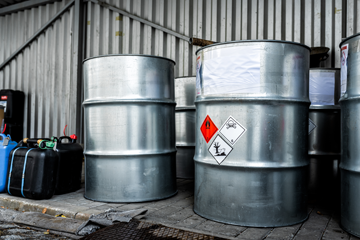
Action to agree at international level how the impacts of chemicals and waste can be minimised has stalled, even as global production of chemicals, the production of goods and the generation of waste continue to grow. Thanks to the Covid-19 pandemic, we don’t know when ICCM-5 – the long-planned UN conference to set the roadmap until 2030 – will be staged. Originally set for October 2020 and then for July this year, the UN is forced to wait for global travel and conferences to become viable, and no one knows how long this will be.
The international chemicals management community cannot afford to do nothing in the meantime, and virtual working groups set up by the UN’s environment programme, Unep, are discussing what could replace the Strategic Approach to International Chemicals Management (Saicm), its voluntary chemicals programme which ended last year. There is support among scientists and the chemical industry for a new intergovernmental body to bridge the gap between science and policy – just as there are such panels on climate change and biodiversity, and a range of issues are under active discussion. But Unep warns there has been little progress on key issues, such as highly hazardous pesticides, endocrine disruptors and nanomaterials, and Saicm remains woefully short of funding.
 © Forance adobe stock.com
So next month’s* Helsinki Chemicals Forum debate on what needs to happen at ICCM-5 is timely, and a chance to keep global chemicals management in the spotlight. One of five topics to be discussed by panels drawn from business organisations, NGOs and government, it will discuss what needs to be agreed at the UN conference, what targets should be set and how countries with advanced regulatory frameworks can assist less developed countries.
"Countries and industry have to step up their work drastically to actually reduce exposure and achieve a safe and healthy environment," says panelist Alexandra Caterbow, co-director of NGO HEJSupport. "We need a process and framework to support the highest health and environmental standards for chemicals of concern that are not covered by existing multilateral agreements, including endocrine disruptors and highly hazardous pesticides. Goals and targets have to be ambitious...we cannot continue with business as usual."
Support and funding to mitigate the health and environmental impacts of chemicals and waste, must be increased, she adds. Despite this being "one of the three big environmental crises" affecting the planet, it remains under-represented in existing funding mechanisms, compared to climate change and biodiversity loss.
It is also important, she says, that public engagement forms a part of projects on chemicals and waste funded by the EU worldwide. Existing information and tools on sound chemicals management applied in the EU should be accessible for all countries and stakeholders, overcoming language barriers. And regions like the EU "should also think about how their policies affect other regions and countries. For instance, hazardous chemicals and pesticides banned in the EU should not be allowed for export to low and middle income countries".
Green chemicals and the EU chemicals strategy
The forum’s green chemical panel will look at the tools and approaches that will be used to implement the key elements of the European Commission’s chemicals strategy for sustainability. Published last October, the strategy represents the most ambitious and comprehensive action plan on chemicals since the EU’s 2001 chemicals white paper which paved the way for the drafting of the REACH and CLP Regulations. The strategy could significantly speed up the rate at which substances of most concern are banned from the EU market. It has also triggered discussions on complex concepts related to chemicals, such as 'essential use' and 'safe and sustainable by design', and how chemical production can help the Commission and member states build a circular economy and achieve 'net zero' greenhouse gas emissions.
 © kalafoto adobe stock.com
So how can we speed up protection against the most hazardous chemicals without other health or environmental considerations losing out in the trade-off? For the chemical industry, says panelist and Cefic chemicals policy director, Steven van de Broeck, safety comes first and to ensure it, chemical safety should be evaluated "very early" in any sustainability assessment process, taking uses during the full life cycle into account. Meanwhile, the REACH data generated can be used to develop digital tools to accelerate innovation and predict safety properties of new chemicals at the lab stage.
There is an argument that restrictions on chemicals can be an opportunity for industry as well as a threat, and Mr van de Broeck agrees that, while it’s hard to generalise, "sometimes they open the way for developing alternatives, just like availability of a new raw material or a new manufacturing process may be an opportunity for other or new chemistries to emerge". But he says tighter regulation is only one part of the equation to meet the Green Deal objectives, and policies "that boost the needed breakthrough innovations the chemical sector holds" are also required.
Meanwhile, Europe "still has a serious issue in enforcing the current chemicals regulation at our borders as we know that 92% of consumer products reported as not compliant with REACH requirements come from non-EU countries. Before jumping to new regulations it is crucial that existing ones are enforced and member states step up their efforts to control imported goods".
Jeremy Wates, panelist and secretary general of NGO umbrella group, the European Environmental Bureau, says one of the most important commitments in the strategy is to swiftly ban the most toxic chemicals from consumer products – including not only substances that are carcinogenic, mutagenic or toxic to reproduction (CMR), but also those that affect the endocrine system, affect the immune, neurological or respiratory systems, or are toxic to a specific organ. Other key commitments are "to make clean recycling the rule, given the growing volumes of harmful chemicals building up in waste streams and ending up back in products", and halting exports of chemicals that are banned for use in the EU but still made and exported from the trade bloc.
Responding to claims from some in the chemical industry that the concept of generic risk assessment is too sweeping, and that some products could be forced to use more costly and poorly performing alternative chemicals, or be forced off the EU market altogether, Jeremy Wates says the EU has been applying generic risk assessments (for example for toys, cosmetics, biocides) for decades without such problems arising. In fact, "downstream companies welcome this approach as it gives a clear indication that they have to look at their products, articles and processes and substitute toxic chemicals with safer alternatives. Of course, companies manufacturing toxic chemicals are not happy, but the health, environmental and economic benefits for Europe need to take priority over the interests of some individual manufacturers – bearing in mind that other companies that have invested in sustainable alternatives will gain from the transition to a sustainable chemical policy".
Transparency and risk communication
 © kitawit adobe stock.com
Another topic on the forum’s agenda is transparency regarding the presence of substances in products, and how to communicate information about substances up and down supply chains. What is the latest thinking on the best way to track chemicals in supply chains and communicate the risks to suppliers and customers, including recycling businesses and consumers?
Panelist Violiane Verougstraete, chemicals management director of trade body Eurometaux, says tracking chemicals in materials and products is essential to ensure proper handling of materials – but it is not easy. Information may be scattered across different actors in the supply chain and it may be linked to companies’ knowhow. The call by some NGOs for mandatory traceability of chemicals in materials, products and waste by 2030 is therefore probably unrealistic, she says.
However, having a defined purpose and target audience will facilitate the implementation of chemicals tracking. Rather than asking which chemicals should be reported, the question should be who the information should reach and for what purposes. "Information needs to be conveyed in a targeted manner, and with clear, transparent messages to avoid confusion of the recipients and unnecessary complexity. Communication of information as such is not the point. We need to ensure the information is valuable and that actors in the supply chain understand the benefit of exchanging it. If this is not done, there is a risk the information will not be communicated consistently, simply leading to a big burden for those who must comply.
Safer substitution
A key issue for sectors downstream of chemicals is the need to find safer alternatives to chemicals facing removal from the market. As the latter increases, not only in the EU but also in some US states and countries such as China and South Korea, the issue has made it onto the forum’s programme this year.
Are companies well down the value chain able to exert much influence on chemical companies when it comes to substitution? Panelist Paul Ellis, head of sustainable chemicals management at retail group Kingfisher, says retailers can influence chemical companies, but this requires a relationship which allows chemical producers to hear what retailers want in their products.
Greater emphasis on targeting chemical groupings will help minimise regrettable substitution, he adds – with phthalates and polyaromatic hydrocarbons examples of where this has happened.
Smaller companies are able to react more quickly than large corporates, but "it takes scale to make change happen, so on their own smaller companies will not be able to have commercially verifiable solutions – change is needed within retailers and chemical producers to work more closely and drive change". This, he says, can only happen with leadership from the company, and more needs to be done to attract more businesses to make such a commitment.
The forum’s final session will look at the example of textiles as a sector where there have been significant challenges, but also real progress in managing the chemicals used in supply chains. The panel includes a representative of the Commission’s industry directorate, DG Grow, which together with DG Environment is leading work to produce an EU sustainable textiles strategy which will set out possible approaches for sustainability, including how to tackle the presence of hazardous chemicals.
*The Helsinki Chemicals Forum will be held as a virtual event on 27–28 April, with panels chaired by the European Commission, Echa, OECD and Chemical Watch. On the first day of the event, Chemical Watch science editor, Andrew Turley, will chair the closing panel: "How ambitious is the new EU Chemicals Strategy?", featuring panelists Virginijus Sinkevičius, environment commissioner of the European Commission, Marco Mensink, director general Cefic, Jeremy Wates, secretary general of EEB. On the second day, Chemical Watch business editor, Leigh Stringer, will chair panel five: "Spotlight on textiles", featuring Frank Michel, executive director, ZDHC Foundation, Christina Jönsson, head of division, RISE Research Institute of Sweden, Ana-Maria Blass-Rico, administrator, REACH Unit, DG Growth, EU-Commission, Manfred Santen, toxics campaigner, Greenpeace, Kirsten Kern, manager of supply chains & sustainability initiatives, American Apparel & Footwear Association.