



 © Sirichai adobe stock.com
When the EU Directive on the restriction of hazardous substances (RoHS) in electrical and electronic equipment was being recast more than a decade ago, the photovoltaic industry lobbied successfully for solar panels not to be brought under its provisions. They argued that this would effectively ban certain solar panels from the market despite their "environmentally beneficial profile" as a source of renewable energy.
The problem was that the panels used a substance restricted under the Directive – the highly toxic heavy metal cadmium. Since the law’s adoption, many exemptions to the RoHS Directive’s substance bans have been granted, usually on the grounds that no technically and economically feasible alternatives exist. But exemptions were also approved because the technology provider in question successfully argued that, from a product life cycle perspective, a substance’s environmental benefits outweighed its negative effects.
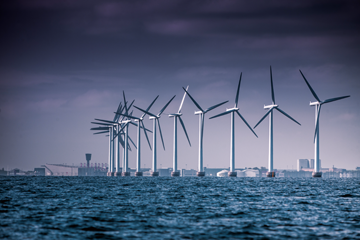
More recently the 'blacklisting effect' of adding three siloxanes to the REACH candidate list of SVHCs led producers to claim that production of products reliant on the substances, and which are needed to meet climate goals – such as multi-glazed windows, solar panels, wind turbines, LED lights and computer circuit boards – will be pushed out of Europe.
 © Voyagerix adobe stock.com
Such developments show that decisions on which chemical uses should be permitted involve tough trade-offs. This is a political process, not a scientific one. It requires political consensus, involving industry, civic society groups and governments, working together to develop a common methodology.
Deciding if a chemical is ‘safe’, or can be used sufficiently safely, is a well established process – albeit one bedeviled by data and information gaps. Risk assessors try to identify all of the chemical’s hazardous properties, its potency, all sources of exposure – both intended and unintended – and the effectiveness of measures to reduce exposure. If the data gaps aren’t too big, there’s a good chance consensus can be reached.
By contrast, a widely accepted way of deciding if a chemical is ‘sustainable’ has yet to be found.
Chemicals only, or chemicals and their applications?
A key issue is whether we are talking about a sustainable chemical, or sustainable use of a chemical. In the former case, the environmental and health impacts of the chemical’s production would need to be assessed. This would include, for example, the amount of energy needed to produce it and its hazardous properties. The latter would require consideration of the whole supply chain and each of the chemical’s uses, including the pros and cons of both the chemical itself and the materials or products it makes up.
On top of this there is the confusion over its meaning that has dogged the word ‘sustainable’ since its inception some 50 years ago. And the challenge of devising a methodology that can weigh up the relative importance of environmental, social and economic factors in a consistent manner. This ‘weighing up’ is about making policy choices. Science and life cycle assessment can provide data, but they cannot provide policy outcomes.
Work to develop safe and sustainable-by-design criteria for chemicals is one of the actions included in the European Commission’s chemicals strategy for sustainability (see box). Ways to boost their uptake and address social, economic and cultural barriers to such a transition will be a key focus of its recently appointed high-level roundtable on the strategy’s implementation.
The strategy makes it clear that focusing chemical production on substances that are safe and sustainable is as much about the bloc’s global competitiveness as achieving climate neutrality by 2050 – or its goal for a toxic-free environment. Such a transition, it says, is not only urgent for society but "an opportunity for the EU chemical industry to regain competitiveness by further developing safe and sustainable chemicals and to bring sustainable solutions across sectors, notably for construction materials, textiles, low-carbon mobility, batteries, wind turbines and renewable energy sources".
While it says regulatory and market initiatives have, to a large extent, been established, "substitution of most harmful substances has not occurred at the expected pace and [company] frontrunners still encounter major economic and technical barriers." To get there, "industry needs stronger policy and financial support, as well as advice and assistance, in particular for SMEs, and it is particularly important to incentivise industry to prioritise innovation for substituting, as far as possible, substances of concern".
A footnote in the strategy document gives the Commission’s preliminary thoughts of what a definition of safe and sustainable-by-design might look like. It singles out substances likely to be (eco) toxic, persistent, bio-accumulative or mobile as ones to avoid.
Of course, the more elements included in the definition of 'sustainable', the harder it becomes to decide how sustainable a chemical is. Should it, for example, include an assessment of the substance’s contribution to ‘circularity’ – in other words the extent to which it aids the recycling of the materials in which it is contained and the value of the recyclate? And should the term ‘recycling’ include chemical recycling? If so, how should chemical recycling be defined?
 © photollurg adobe stock.com
And what about the damage caused by producing and supplying the materials from which chemicals are made - the minerals, fossil fuels, crops or waste streams? Should these issues be included for completeness sake, or would doing so make the assessment of a chemical’s sustainability too complicated?
While DG Environment is leading the Commission’s thinking on chemical safety, its Research and Innovation Directorate (RTD) is leading on sustainability. The Commission’s Joint Research Centre (JRC), the European Environment Agency (EEA) and Echa have all been asked for input. Some months before the chemicals strategy’s publication, the chemicals agency proposed a simple definition based on safety, circularity and the energy used to make a chemical - the three pillars of 'safe and sustainable'. It is firming up these ideas and hopes they will find favour with the Commission. However many chemical companies are likely to object to the exclusion of the benefits offered by products and applications such as batteries, electric vehicles and renewable energy technologies vital to achieving carbon neutrality.
The EEA has chosen to look at chemicals and products together, and earlier this year published a briefing paper on making chemicals and products safe and sustainable-by-design. Like Echa, the EEA includes chemical safety, circularity and energy (greenhouse gas emissions) but it broadens circularity to include resource use and it adds a fourth pillar, the impact on ecosystems during resource extraction and emissions of pollution throughout the product’s life cycle. Both agencies are right to propose definitions that would serve to help the Commission implement not only its chemicals strategy but also its circular economy action plan and 2030 climate target action plan.
The EU research programme Horizon Europe includes sub-programmes which will try to develop safe and sustainable-by-design criteria for three product groups encompassing substances, materials and products. The Commission hopes the conclusions will also help it steer its Sustainable Products Initiative and enable the programme to set product requirements addressing a range of environmental concerns.
Chemical industry thinking
While important parts of Europe’s chemical industry oppose the Commission’s chemical strategy and see it as a threat to their bottom line, industry association Cefic has publicly supported it, including the proposal to set criteria for safe and sustainable chemicals, although with important reservations.
 © Gorodenkoff stock.adobe.com
Just as important to the chemical industry as helping the Commission meet its "zero pollution ambition for a non-toxic environment" of which the chemicals strategy is a key element, is mobilising research, innovation and investment in the sector to help achieve other parts of the Green Deal such as the EU’s climate ambitions for 2030 and 2050 and achieving a clean and circular economy.
Here, says Cefic product stewardship executive director Sylvie Lemoine, "policy coherence is one of the things that creates the trust that the chemicals industry needs to make investments because it shows decision makers that everything fits together and that investing in a particular technology or chemical is the right thing to do."
This need to meet such a wide range of policy objectives means the process of setting safe and sustainable-by-design criteria is potentially very complex, she says. But if it is done well, the criteria will be "a huge opportunity for designing the new chemistries of tomorrow".
Cefic says that safety is the number one issue for chemicals and that this can never be compromised. But it agrees there is room for improvement when it comes to assessing and ensuring safe use, and that in the future chemicals should be safe-by-design from the lab stage. It also agrees that effective methods of predicting the toxicological properties of products from the lab stage are not here yet. Some say these are decades away.
Alongside Cefic, some NGOs, the EEA and Echa all agree that some elements of a chemical's environmental footprint, recyclability and energy use or carbon footprint for example, should also be part of the safe and sustainable definition. But the debate has just started on whether other elements, such as renewable raw materials, should also be included. Cefic wants the criteria to go beyond environmental and health concerns to include a chemical's benefits to society and economic issues such as a chemical's affordability.
Reaching a consensus on whether to include these elements and, if so, what sustainability looks like, is going to be a complex process. Finding common ground accepted by all stakeholders and a practicable, workable set of criteria would be a huge achievement.
The EU chemicals strategy: what it says about 'safe and sustainable'
Actions planned by the European Commission
- Develop EU safe and sustainable-by-design criteria for chemicals
- Establish an EU-wide safe and sustainable-by-design support network to promote cooperation and sharing of information across sectors and provide technical expertise on alternatives
- Ensure the development, commercialisation, deployment and uptake of safe and sustainable-by-design substances, materials and products through financial support – in particular to SMEs – under Horizon Europe, cohesion policy, the LIFE programme, other relevant EU funding and investment instruments and public-private partnerships
- Map and address safe and sustainable-by-design skills mismatches and competence gaps, and ensure adequate skills at all levels – including in vocational and tertiary education, research, industry and among regulators
- Establish, in close cooperation with stakeholders, KPIs to measure the industrial transition towards the production of safe and sustainable chemicals
- Ensure that the legislation on industrial emissions promotes the use of safer chemicals by industry in the EU by requiring on site risk assessments and by restricting the use of SVHCs
Preliminary definition of safe and sustainable-by-design
A pre-market approach to chemicals that focuses on providing a function or service, while avoiding volumes and chemical properties that may be harmful to human health or the environment, in particular groups of chemicals likely to be (eco) toxic, persistent, bio-accumulative or mobile. Overall sustainability should be ensured by minimising the environmental footprint of chemicals, in particular on climate change, resource use, ecosystems and biodiversity from a lifecycle perspective.