



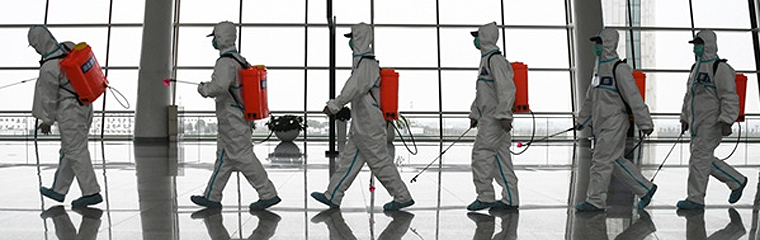
Despite the globally rising number of coronavirus Covid-19 infections fuelling concern over a shortage of personal protective equipment (PPE), companies and occupational health bodies are positive this will not affect the chemical industry.
Demand for protective gear has shot up 100-fold since the virus began to spread, according to the WHO, which warned about global shortages of PPE as early as February. It called on manufacturers to increase production by 40% to meet the rising global demand of masks, respirators, gloves, gowns and face shields for frontline health workers.
Some chemical manufacturers, such as DuPont de Nemours, Eastman Chemical and Huntsman Corporation have switched their production lines to make chemical materials used in the production of PPE.
But the drive to direct PPE towards the Covid-19 fight is not having a knock-on effect on the ability of companies to retain sufficient equipment for protecting their workers from chemical exposure.
Speciality chemicals trade group Socma said it is "following this issue, and so far, our member companies seem to have enough on hand for the foreseeable future."
In the UK, the Chemical Business Association (CBA) confirmed that companies "are not expecting an issue".
And the European Trade Union Institute (Etui), which keeps a close eye on occupational exposures to chemicals, said there is "no evidence that companies outside of healthcare are struggling to retain their PPE."
The chemical industry is unlikely to face a shortage any time soon because the PPE used to prevent chemical risks is different to that used to prevent biological risks, Etui and the CBA said.
"Chemical resistant suits, PVC-coated chemical resistant gloves, carbon filter masks to protect the respiratory system from chemical exposure, they are not comparable with what the health services are using," said CBA chief executive, Peter Newport.
The European Agency for Safety and Health at Work (Osha) added that some of the gear used to protect workers from the coronavirus, such as dust masks, could be widely used in other areas.
But workplaces, where appropriate PPE is already part of chemical exposure prevention measures, may have a stock, Osha said.
In any case, EU OSH rules provide a hierarchy of chemical exposure control measures that place PPE last; after the elimination or substitution of hazardous substances, and technical measures, such as ventilation.
"It is important that appropriate measures are taken at workplaces and preferably this should be technical rather than personal protective measures. A shortage of PPE may drive implementation of better technical measures, too," an Osha spokesperson said.
Measures to increase supplies
Meanwhile, the Irish Health and Safety Authority (HSA) – which has also "to date ... not been made aware of any specific company issues regarding the sourcing of PPE" – is reviewing new supplies coming in.
In March, the European Commission issued a Recommendation to speed up and simplify procedures for the distribution of PPE and medical devices. Manufacturers of PPE and medical devices can now place products on the market without the otherwise necessary CE marking.
The HSA is "receiving and processing queries and requests in line with this Recommendation."
In the US, the EPA announced that it has identified approximately 225,000 pieces of PPE available to support the Covid-19 response. The equipment is taken from a supply of the agency’s emergency response functions, such as responding to chemical, oil, radiological, biological and hazardous incidents.
And the US Osha has issued interim enforcement guidance to help combat supply shortages of disposable N95 filtering facepiece respirators (N95 FFRs).
Employers should "reassess their engineering controls, work practices and administrative controls to identify any changes they can make to decrease the need for N95 respirators," Osha said.
If respiratory protection must be used, employers should consider alternative classes of respirators.
Get in touch
How is Covid-19 affecting you, your team and your organisation? We would like to hear about your needs, views and experiences during the pandemic, to understand how it's affecting your day-to-day work, and to ensure we are taking the right steps to meet your needs. Please get in touch with us at covid19@chemicalwatch.com.