



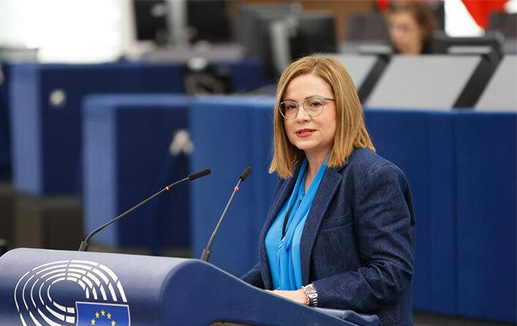
 © mariaspyraki.eu
Although far-right parties took fewer seats than expected in last week’s European elections, the gains made could be "problematic" for the future of chemicals and environmental policy, NGOs have said.
Predictions of a far-right surge did not materialise and the European People’s Party (EPP), Socialist and Democrats (S&D) and Renew still hold a majority of the seats.
However, this majority is now slimmer and the balance of power now weighs stronger with the EPP – a centre-right party. In addition, to build a stronger majority, a fourth party is needed. The question in the coming weeks as the groups are negotiating is whether the Greens or the European Conservatives and Reformists (ECR) will fit that role.
NGOs fear that the results will have an impact on the rollout of Green Deal proposals, including the revision of REACH and the ‘one substance, one assessment’ package.
ChemSec said it will "likely be very problematic", with the centre right cementing their power by securing 189 seats compared with 182 in the last election, while the Greens will start the next parliamentary term with 53 seats compared with 71 before the elections.
The EPP has been accused by NGOs of watering down various parts of the EU’s flagship environmental policy, such as rejecting the Nature Restoration Law and a bill to slash the use of pesticides in farming.
Anaïs Berthier, head of the Brussels office of ClientEarth, said: "The parties that gained significant MEPs in these elections have run a dangerous and misleading campaign against environmental legislation, which has become the scapegoat for all that is wrong at EU level."
"They campaigned on security, but ignored the major security risks that the climate, biodiversity and pollution crises pose for Europeans," said Berthier.
But James Stevens, managing Partner at Rud Pedersen, said that irrespective of the election results, it is unlikely members of the Parliament will be less restrictive on chemical safety issues. "What we can expect is a more pragmatic approach when it comes to recognising the role of chemicals in enabling the technologies needed in support of the goals like net zero and strategic autonomy." he said.
Maria Spyraki
Greek MEP Maria Spyraki (pictured), an influential lawmaker in the Parliament's environment committee, has failed to win a seat in the European Parliament. Spyriaki, from the EPP, was the rapporteur on the CLP regulation and pegged as the rapporteur of the upcoming ‘one substance, one assessment’ package.
Her departure from Brussels means the EPP will have to find another lawmaker to represent the Parliament during negotiations with the other EU institutions, adding uncertainty to the timeline of the proposal.
Meanwhile, Environment Commissioner Virginijus Sinkevičius will stay in Brussels as a MEP for the Democratic Union For Lithuania, a new political party that has recently joined the Green group. In a statement, he vowed to continue working on the implementation of the Green Deal.
Other influential MEPs on chemicals legislation (see box), including Bas Eickhout and Martin Hojsik, are also set to return to Brussels as MEPs.
The influential MEPs who will stay in, or leave, Brussels
|
Who: Pascal Canfin |
|
Who: Bas Eickhout |
|
Who: Martin Hojsik |
|
Who: Maria Spyraki |
|
Who: Peter Liese |
|
Who: Tiemo Wölken |
|
Who: Anja Hazekamp |
|
Who: Jutta Paulus |