



 © Kelly Franklin
The number of violation notices filed under California’s Proposition 65 jumped earlier this year, as much of the state began shutting down in response to the coronavirus Covid-19 pandemic.
Nearly 350 of these notices of intent to sue were filed in March, the most in a single month since August 2018, according to a review of filings compiled by the state attorney general’s office. The majority of those notices – the first step in private enforcement litigation under Prop 65 – came in the second half of the month, as many California state courts started to suspend operations and the governor issued an order instructing residents to stay at home.
With court proceedings going on hold, "that gives lawyers time" to complete notice filings like these, Brent Johnson, partner with Holland & Hart, said.
Anne Marie Ellis – senior counsel at Buchalter, who helps clients with Prop 65 compliance – estimated that filings will likely stay steady or slightly increase in the weeks ahead.
Mr Johnson, however, said the court slow-down only "explains part of the ramp up" in 60-day notice of violations.
Prop 65 process draws criticism
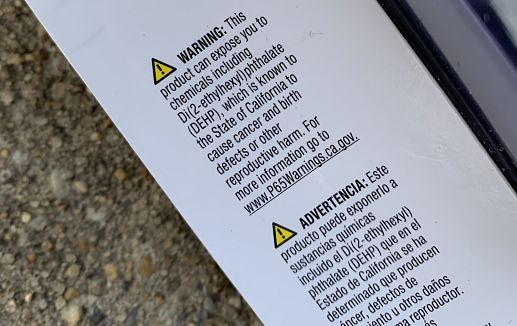
Prop 65, or the Safe Drinking Water and Toxic Enforcement Act, requires businesses to inform Californians about exposures above safe harbour limits to certain chemicals that are known to the state to cause cancer or other harm.
Under Prop 65, a business can be served with a 60-day notice by a plaintiff’s lawyers or other groups, outlining an alleged violation and the products and chemicals involved.
The right-to-know scheme has faced criticism that it creates costly regulatory burdens on industry and can be confusing to consumers.
Industry has also been critical of the law’s private enforcement provision, allowing anyone to file a notice of violation, saying it encourages a "bounty hunter" mentality where bulk violation notices can bring in settlement fees.
March court decision
Another possible contributor to the spike in notices is the 3 March determination by a federal court not to weigh in on a request by the California Chamber of Commerce to block Prop 65 warnings for products containing acrylamide. The listing garnered headlines in 2018 after a state court said a warning label was required for the substance’s presence as a byproduct in coffee.
After that March decision, multiple notices of violation involving acrylamide were filed, said Mr Johnson, who represents corporations in litigation matters in California. "Lawyers were kind of on hold until that case was sorted out".
Filings with the state AG’s office bear that out. Since March 3, nearly 90 notices of violation involving acrylamide have been filed.
Many of the recent notices also involve phthalates, lead and lead compounds, which have been a consistent focus in the last few years, Ms Ellis said.
In total, there were 348 notices of Prop 65 violation filed in March, with 28 of those relating to acrylamide. April saw 243 notices, with more than 100 filed through 20 May. That compares to an average of about 208 notices filed each month over the last three years.
What comes next?
Ms Ellis said she expects the slow-downs from Covid-19 may slow the pace of action on the litigation side of the equation, at least for Prop 65 claims that are not settled during the notice stage.
Many California courts remain closed and will only start opening in the days ahead. In addition, California Chief Justice Tani G Cantil-Sakauye has issued a number of emergency orders pushing back the statute of limitations and other deadlines by 60 days in most civil cases.
That takes the pressure off of plaintiff’s lawyers to bring a lawsuit, Ms Ellis said.
On the other hand, Mr Johnson said, corporate defendants get a little more "breathing room" to consider how they want to respond if they are the subject of violation notices.
One way it could work to companies’ advantage, Mr Johnson said, is by providing more time to test for chemicals of concern in products accused of violating the law. Violation notices can be withdrawn if a defendant can show the underlying testing was inaccurate, he said. The court delay is not a huge advantage, but it gives defendants "more time to make a reasoned decision".
In the end, however, Mr Johnson said Prop 65 litigation has never been driven by court filings or deadlines, except maybe in some of the acrylamide coffee cases.
Caroline Cox with the Center for Environmental Health (CEH) agreed. When CEH files a notice, it typically takes a year to 18 months to negotiate a consent judgment with a defendant, she said. In that sense, the 60-day delay is not a long time.
A number of actions have settled despite the pandemic and the slow down in courts. Already in May, courts have approved three settlements, totalling nearly $90,000, according to settlement reports tracked by the state attorney general. Another six actions have settled out of court this month.
Prop 65 gets a lot of bad press, Ms Cox said, but a huge number of products have been reformulated since the law was enacted in 1986 so they no longer contain high levels of concerning chemicals.
Terry Hyland and Amanda Ulrich