



 © ChiccoDodiFC stock.adobe.com
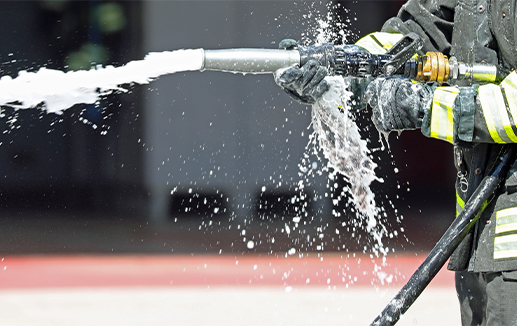
South Korea's decision to request an extension to its exemption for the use of perfluorooctanoic acid (PFOA) in firefighting foams has drawn criticism from a researcher investigating PFAS in drinking water in wells close to US military bases in the country.
The extension was granted during the recent Stockholm Convention Conference of the Parties (SC COP) meeting, despite reservations from observers about allowing continued use of PFOA.
However, Kyungho Choi of Seoul National University told Chemical Watch News & Insight that the decision is "misguided", as PFOA exposure in the Korean population is already relatively high.
"Drinking water is recognised as a major source of exposure for the general public, and according to recent results from the Korea National Environmental Health Survey, serum levels of PFOA in the Korean population remain elevated," Choi said.
"Considering that a sizeable proportion of the individuals exceeded the human biomonitoring (HBM-II) threshold established for PFOA, extending the exemption is wrong and will likely undermine public health," he added.
Choi is part of a research team led by Yuna Kim at Seoul National University that conducted a study testing for 30 types of PFAS in groundwater within a 2km radius of four US military installations in South Korea.
According to the study, along with three major perfluorosulfonic acids (PFSAs) – PFOS, PFHxS, and PFBA – the most frequently detected compounds included PFSAs with chain lengths containing between four and six perfluorinated carbon atoms (C4−C6), and relatively shorter chain perfluorocarboxylic acids (PFCAs).
The research focused on PFAS contamination at four millitary bases located in Uijeongbu (near the Demilitarized Zone), Daegu and Chilgok. As of 2024, Chilgok was the only military installation among the study sites fully operational. The others were partially operational, the team noted.
PFOA and PFOS were detected at the highest levels – 125 nanograms per litre (ng/l) and 103.7ng/l, respectively. This is several orders of magnitude higher than those observed in wells farther from the bases, Choi said.
Short-chain PFCA and PFSA were dominant in the groundwater samples near Uijeongbu, whereas long-chain variants (those with carbon chains between 7 and 14) were more prevalent in wells located near the other three camps.
The regional differences in PFAS composition may be due to the use of different PFAS-containing AFFF, although this could not be confirmed, as the types of AFFF used in the military installations are unknown.
The authors also noted that both PFOA and PFOS have previously been detected at high levels – up to 1,061ng/l for both – at five US military installations located in South Korea. However this is the first study to examine PFAS contamination in publicly accessible groundwater wells near military bases, the team said.
Similarly, PFAS has been found in groundwater samples collected in Daegu, though concentrations were significantly lower than those observed near the US military sites.
Regulating PFAS as a group
Currently, South Korea does not have legally enforceable standards for PFAS in drinking water. However, PFOA, PFOS and PFHxS have been included in the national drinking water watch list, with monitoring guidelines since 2018.
The guidelines set thresholds at 70ng/l for PFOA and PFOS and 480ng/l for PFHxS. Quarterly monitoring is required, said Choi, but he emphasised that more needs to be done.
"Routine monitoring should be expanded to include major legacy PFAS as well as their emerging substitutes, such as fluorotelomer sulfonates and other alternatives," he said.
Choi explained that, given the rapid replacement of long-chain PFAS with structurally similar analogues, regulatory frameworks should adopt a class-based approach, targeting groups of PFAS rather than individual substances.
"This is essential, as many replacements may exhibit similar – albeit often lesser – persistence and toxicity to well-known compounds like PFOS, PFOA and PFHxS," he said.
As a first step in combating PFAS pollution in drinking water, Choi said the government should look to restrict or phase out a priority list of PFAS, such as the 20 substances proposed in the EU.
"Ultimately, however, a comprehensive ban on all PFAS should be considered to protect environmental and human health," he concluded.
PFOA specific exemption
South Korea requested a specific extension request to continue using PFOA, its salts and related compounds, and PFOS, its salts and PFOSF in fire-fighting foams. The exemption applies to systems – both mobile and fixed – used for liquid fuel vapour suppression and liquid fuel fires (Class B fires).
The current specific exemption was set to expire on 2 June 2026. However, as agreed at SC COP, South Korea has been granted a four-year extension, allowing continued use until 2 June 2030.