



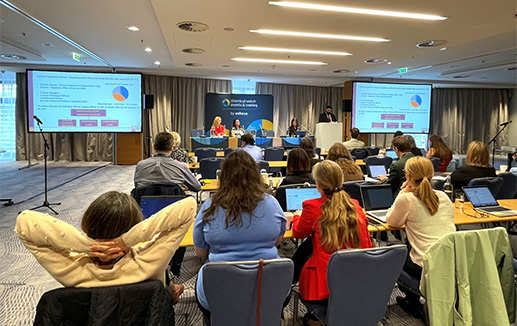
 © Chemical Watch Events & Training
Almost 100 new suppliers have entered the EU biocides market since data needed for registration as an official substance supplier became temporarily available for free.
The surge will unnerve data owners who could face an uphill battle to claim compensation for costly studies they generated to authorise chemicals under the Biocidal Products Regulation (BPR) in exchange for exclusive access to the market.
Data generated to support the approval of biocidal active substances has been freely accessible since the end of last year, when the BPR’s legally defined protection period expired.
As of 28 May, the Article 95 list of approved substance suppliers has gained 132 new entries since 1 January. ECHA, which maintains the list, confirmed to Chemical Watch News & Insight that 99 of these relate to dossiers for which data protection expired last year.
Compensation concerns
A new, five-year protection period will commence on 15 June. The European Commission confirmed in a 26 May regulation that data owners will be able to "claim compensation" from entities that have accessed or will access their data between 1 January and 15 June this year.
But Henning Krüger, owner of German BPR-specialised law firm ChemLAW, warned it could be "almost impossible" to successfully claim compensation from a new Article 95 listee, owing to legal uncertainties surrounding the clause.
With the Commission regulation containing no further detail, the legal basis of compensation claims remains open to interpretation, Krüger said at the Chemical Watch Events & Training Biocides Symposium 2026 (pictured). Regulations that apply retroactively are generally prohibited under EU law, unless they are in the public interest: an argument that courts will likely challenge, Krüger said.
"You might argue that preventing an unfair market is in the public interest. But on the other hand, we have the legitimate expectation of companies wanting to enter the market by using data provided almost a decade ago, for which protection should have expired under the old law," Krüger told delegates at the 19-20 May event in Duesseldorf, Germany.
Data owner onus
Without a notification mechanism for new Article 95 listings, the onus will be on data owners to monitor if their data has been used, identify the relevant listee and instigate a compensation claim. Krüger added that identifying parties could pose a challenge, with foreign companies often listing proxies as EU suppliers.
It is unclear whether resulting court cases would fall under the jurisdiction of the national court in the data owner’s country or that of the Article 95 listee, Krüger said. The regulation also does not specify whether data owners would bring their claim against the company listed in Article 95, or the one benefitting from the listing, such as the foreign entity behind a proxy listing.
And questions remain over the amount of compensation data owners could be eligible for. According to the Commission regulation, data owners may only claim compensation for the use of their data for the period from 1 January to the date the new regulation takes effect.
"The question is, does this indicate limitations regarding the amount of compensation data owners can require?" Krüger said.
Questions surrounding the compensation clause will not be answered "until somebody tries" a claim, he added. For the duration of potentially lengthy court cases, companies that accessed data during the protection gap will likely remain listed as eligible substance suppliers.
ECHA told Chemical Watch News & Insight that the legislation does not foresee an active role for the agency in filtering out affected Article 95 entries or removing them from the list.
"However, we would comply with any relevant court order or judgment should an ECHA decision to include a supplier on the list be suspended or annulled," the agency said.