



 © VectorMine stock.adobe.com
An Australian Senate inquiry into the health impacts of toxic substances, including micro- and nanoplastics (MNPs), has recommended that, as a priority, the government enforce the ban on PFAS in cosmetics and personal care products, including period products.
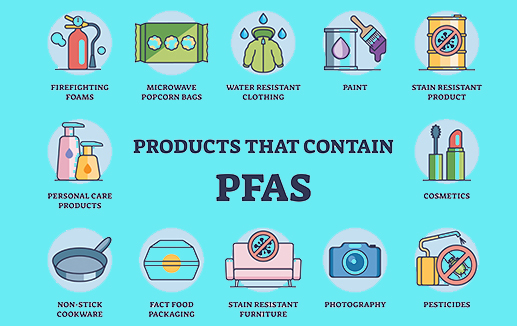
It also recommends collaboration between government and stakeholders to evaluate PFAS contamination in clothing, textiles, floor coverings and furniture, and to identify and reduce imports containing these chemicals.
The inquiry was launched amid concerns over declining fertility rates and rising cancer incidence among young people, with environmental factors such as MNPs, PFAS and other toxic chemicals increasingly identified as possible contributors.
However, fragmented national regulation, knowledge gaps and research limitations are impeding policy-making on the impact of these substances on human health.
Despite this, there is consensus among inquiry participants that a precautionary approach to exposure to MNPs, PFAS and other toxics should be adopted. "Uncertainty is not a reason for inaction," the inquiry committee said in its report, adding that stakeholders should not remain passive while waiting for scientific evidence, as "delaying action may result in adverse but preventable health outcomes".
The committee recommended that the government mandate the Australian Centre for Disease Control to coordinate a whole-of-government approach to monitoring the potential impacts of MNPs and PFAS on human health, with a view to developing a national strategy by 2028.
Calls for action
Echoing the inquiry’s findings, Doctors for the Environment Australia (DEA), a national medical advocacy group focusing on environmental health, said that if credible evidence indicates a chemical could cause harm, exposure should be reduced even when studies are incomplete or conflicting.
Leila Cusack at the DEA told Chemical Watch News & Insight: "The precautionary principle must apply. Chemicals should be proven safe before use, particularly in food contact materials and products used by pregnant women and children. Five EU countries have already proposed restricting over 10,000 PFAS. Australia should adopt EU-level regulations as a minimum standard and move towards class-based bans without delay."
Dr Cusack added that manufacturers must be held accountable for the full lifecycle of their products, including managing the health and environmental costs currently borne by the public and the planet.
A team of nine experts in reproductive toxicology and environmental health, led by Jacinta H Martin at the University of Newcastle, New South Wales, also supported a national standard regulating PFAS as a class in consumer products. They warned that "Australia’s current regulatory approach remains largely focused on individual PFAS chemicals and tends to respond only after new evidence emerges", adding that "this creates the risk of regrettable substitution, where one restricted chemical is replaced with a similar but less well-studied alternative that is also likely to cause health effects".
The Australian Medical Association (AMA) also supported precautionary action on PFAS, other persistent chemicals and microplastics, saying a harm-reduction approach should be taken rather than waiting for definitive causal proof where population-level risk may already be accruing.
Limiting MNPs
The Textile Recyclers Group (TRG), which supports research converting textile waste into activated carbon (AC), said uncontrolled shredding of textiles is one of the most significant sources of microplastic generation. To reduce this, Australia must transition to controlled technologies capable of preventing fibre release, it said.
The group recommended supporting labelling frameworks to help industry and consumers identify low-shedding products, and encourage transparent reporting of microplastic emissions across supply chains.
Professor Thava Palanisami at the University of Newcastle advocated mandatory design standards for low-shedding materials and for expanding chemical safety frameworks to include plastic-associated toxics, in a submission on behalf of Australian Plastics Research and Innovation Lab and the Healthy Environments and Lives (HEAL) National Research Network. The submission also recommended phasing out high-risk microplastic sources, such as primary microplastics, synthetic fibres and tyre-wear emissions.
While many submissions recommended a precautionary approach, Chemistry Australia said the current scientific literature on microplastics "is not suitable for risk assessment and should not serve as the basis for regulatory conclusions or policy actions". Although it said it shared the global industry vision of plastics that are sustainably produced, designed, used, reused and recycled in a circular economy, it added that eliminating leakage of plastic waste into the environment should remain a focus of collaborative efforts.
The organisation also recommended that regulators adopt a weight-of-evidence approach grounded in established toxicological principles and validated study designs, and avoid overinterpretation of preliminary or exploratory findings in policy development.
Additional recommendations
Other recommendations in the report include:
- the government consider allocating funding to support industry innovation to reduce MNPs and PFAS in products at the source;
- the government work with state and territory governments to expand extended producer responsibility (EPR) schemes, harmonise product stewardship legislation and accelerate the transition to products that are more durable, easier to recycle and made from less harmful materials; and
- the Department of Climate Change, Energy, the Environment and Water (DCCEEW) review international regulatory approaches to managing MNPs, PFAS and endocrine disrupting chemicals (EDCs), with a view to developing a coordinated, whole-of-government regulatory response.