



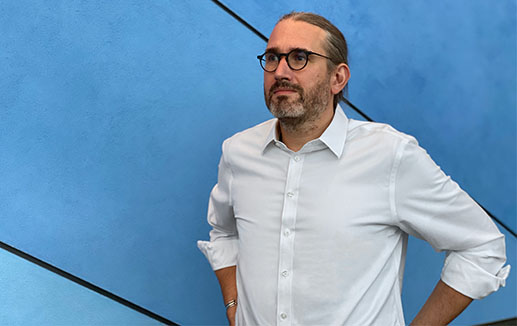
A broad centrist coalition in the European Parliament after the June elections next year would "put the new Commission to task" over the delayed REACH revision proposal, influential environmentalist MEP Martin Hojsik (pictured) has told Chemical Watch News & Insight in an exclusive interview.
The Slovak politician and activist, who is a member of the liberal centrist Renew Europe political group, said that if the legislation is not updated in the next parliament, it would be "the political responsibility of the [MEPs] that are opposing it".
Hojsik said the REACH revision is crucial for health, the environment and jobs, adding that he hoped the parliament will put pressure on the next European Commission to "make it happen".
Opinion polls signal a surge for right-wing parties such as the European Conservatives and Reformists (ECR) in the 6-9 June election, sparking debate about whether the centre-right European People’s Party (EPP) – the largest group in Parliament – might partner with ECR in a coalition.
That could be detrimental for the EU Green Deal, the brainchild of the current Commission, as ECR opposes it.
Hojsik dismissed the prediction of a right-leaning coalition that could scupper the Green Deal, which the REACH revision is part of. He called such speculation "irresponsible", particularly as EPP and the party that dominates the ECR group – Poland’s right-wing, populist and anti-EU Law and Justice Party (PiS) – strongly oppose each other's political positions.
"How could they work together? They hate each other," he said. European elections are complex and difficult to predict, he added, and did not comment on whether Renew would remain in a coalition with EPP if it was steered to the right.
"The hope is we will see a broad coalition like we have now, spanning left and right and trying to hold the centre of European politics, to look for a coalition that will be trying to bridge the divides rather than creating them," he said.
Whatever the outcome, from his perspective the question about the REACH revision "is not if, but when", Hojsik said, but there is a risk it might be weakened or ditched by the new Commission: "I’ll believe it when I see it. Until it’s on the table, it doesn’t exist."
‘German politics’
The revision's delay, now most likely to be legislated in the next parliament, came amid pressure from the German industry association Verband der Chemischen Industrie (VCI).
But Hojsik, who is a vocal member of the parliament's environment committee (ENVI), laid the blame specifically on "German internal politics", not the industry, as has been widely perceived. European Commission president Ursula von der Leyen’s German opposition party the Christian Democrats, which are part of the EPP, are solely responsible for the delay, he said.
"Ultimately the decision whether to table REACH or not was, and still is, in her hands and since her home party was actively opposing it, it didn’t happen," Hojsik said.
The MEP has been "in close contact with the Cefic leadership" and was "personally assured by" its president, BASF CEO Martin Brudermüller, that industry wants the new REACH in order to stay competitive on the global platform and to have regulatory predictability.
Major chemical companies have told him, he said, that they have put on hold investments worth hundreds of millions of euros, waiting for a decision on REACH.
"So the fact that the Commission has been blocking the progress of REACH has hampered investment in Europe," Hojsik said. "This undermines the competitiveness of Europe."
Essential use, PFAS
On ‘essential use’ – the controversial concept the Commission wants to bring in to speed up restrictions on the most harmful chemicals – Hojsik said he did not support industry’s calls for safe use exemptions as part of the criteria.
If a use is not essential, he said, then no safe uses of intrinsically hazardous chemicals should be allowed, he said, adding that essentiality should be considered only after an assessment of alternatives. Industry has demanded that safe uses are excluded first.
He also wants the Montreal Protocol to form the basis of the essentiality criteria on chemicals – a position industry is strongly against.
For PFAS, Hojsik said, around 80% of uses appear to be not essential and "and we have alternatives in more than is generally acknowledged".
He also said that, despite major strides the current EU leadership has made in chemicals legislation, such as the CLP revision and new hazard classes, crucial pieces of the chemical strategy are still missing.
A top priority is a new founding regulation for ECHA, which is "strained and stretched to the limit", Hojsik said.
"Exactly because of this we need to update REACH so we have one coherent policy, and the changes are not coming in through lots of different legislation, creating a higher level of complexity for industry."