



 © Kelly Franklin
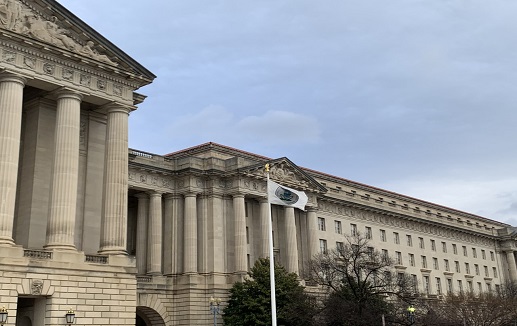
The US EPA’s recent proposal to overhaul its 2017 risk evaluation ‘framework’ rule could bring about big changes to the existing chemicals programme, including stricter risk management rules, new legal vulnerabilities and increased political influence, industry experts have said.
The proposed rule represents "a sea change", said Judah Prero, counsel with Arnold and Porter. "If it really goes ahead as EPA is proposing, it’s totally shifting the dynamic."
Released in October, the proposal looks to codify the current administration’s policies for conducting reviews of high-priority chemicals, by mandating a whole-chemical approach for risk determinations and barring consideration of personal protective equipment (PPE).
Furthermore, it would remove the agency’s discretion to exclude any conditions of use (COUs) from the scope of an evaluation, require consideration of fenceline communities, edit or delete certain scientific definitions and overhaul procedures for manufacturer-requested risk evaluations (MRREs).
Prero told Chemical Watch News & Insight that many of the policies contemplated are in effect today. However, by putting them into a regulation, the EPA would be saying it no longer has discretion to do things like exclude a COU on an as-needed basis or bypass a certain exposure pathway when assessing risk.
This would result in a risk evaluation process that takes even longer and risk management rules that are "more onerous and more conservative", because they would need to account for everything, Prero said.
Moreover, by requiring more all-encompassing reviews, the EPA could really 'hamstring' itself in future possible litigation when trying to defend decisions it made in a risk evaluation.
"Legally, the bar has been raised," he said. The agency "may not necessarily realise the totality of what will happen if this actually gets finalised."
All roads lead to risk management
The American Chemistry Council's (ACC) Karyn Schmidt said the cumulative impact of the proposed changes would result in "the vast majority, and perhaps all risk evaluations", facing an ‘unreasonable risk’ determination.
That means every substance prioritised for risk evaluation would eventually face risk management under TSCA, and businesses would face years of "ambiguity and uncertainty" over whether their use would eventually be regulated, she said at a recent ACC-hosted event on the proposal.
"This is a fairly aggressive approach, in our view," Schmidt said. "There is some significant benefit for the agency to retain discretion to make a determination based on a subset of conditions of uses."
During the same event, the ACC’s Paul DeLeo highlighted how pairing the proposed evaluation process with the agency’s current approach to risk management suggests that COUs not clearly called out in the scope of an assessment could still wind up being prohibited.
Proposed rules for solvents like trichloroethylene (TCE) and methylene chloride have indicated the EPA plans to impose broad prohibitions with certain exceptions, he said. "So, if you have a condition of use that wasn't evaluated, by virtue of the approach they're taking in risk management, you'd be prohibited from maintaining [it]," he said.
Attorneys at Beveridge & Diamond agreed.
It "could mean that all conditions of use other than those specifically listed for [a workplace protection programme] would be banned – not just those listed in the scope document or the risk evaluation itself."
According to Dr DeLeo, it will be important for industry to ensure its uses are captured in the scope of a risk evaluation, so those applications avoid potential prohibition without ever being reviewed.
"If you look at EPA’s current process and consider it, it appears like REACH authorisation in Europe," Dr DeLeo said. "That’s probably the lens through which you might want to view this activity."
Scientific issues
Lynn Bergeson and Rich Engler of Bergeson & Campbell said their primary concern centres around the proposal to remove scientific definitions like ‘best available science’ and ‘weight of the scientific evidence’ from the rule.
The EPA said removing these terms would give "flexibility to quickly adapt to and implement changing science".
But according to Bergeson and Engler, it "may allow for interpretations that are not based in science, but rather on the prevailing views of an administration".
Proposed changes to the agency’s peer review approaches – including allowing for a review of only certain portions of an evaluation – adds further concern, they said, because it could "lead to cherry picking peer-reviewed information that supports a preferred outcome rather than a scientifically defensible outcome".
"Overall, this proposal puts much more discretion in EPA’s hands and could easily lead to regulatory whiplash whenever there is a change in the administration," the attorneys said.
Comments on the proposal are due by 14 December.