



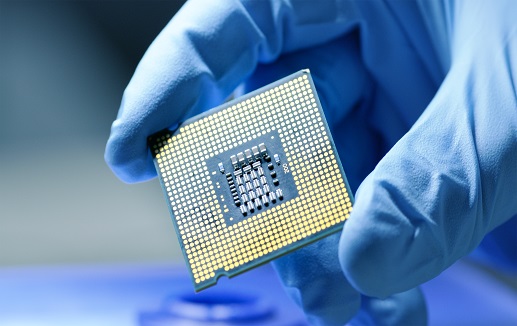
 © Gorodenkoff stock.adobe.com
Singapore’s National Environment Agency (NEA) has exempted a range of uses of medium-chain chlorinated paraffins (MCCPs) and long-chain perfluorocarboxylic acids (LC-PFCAs) from a ban that takes effect on 16 December.
The manufacture, import, export and use of the substances, and of products containing them, can continue for the listed applications. These uses will also be exempt from the agency’s licensing requirements, the NEA said in a hazardous substance control circular dated 6 November.
The 16 December deadline still applies to all other uses of the two substance groups. It also applies to all uses of chlorpyrifos, for which the circular lists no exemptions.
MCCP exemptions
For MCCPs with chain lengths of C₁₄ to C₁₇ and chlorination levels ≥45% chlorine by weight, the exempted uses are:
- adhesives and sealants for aerospace and defence applications and for waterproof and anticorrosion coatings, plus tape for non-structural bonding in aerospace and defence products;
- electrical and electronic equipment (EEE) finished products, semiconductors, and semiconductor manufacturing equipment and associated support systems, along with related components and auxiliary materials;
- flexible elastomeric foam for thermal insulation, and flexible polyvinyl chloride (PVC) limited to construction uses other than flooring in indoor spaces not used for commercial purposes, and to wires and cables in medical devices and in vitro diagnostic devices;
- all medical devices listed in the First Schedule of the Health Products Act; and
- extreme temperature and pressure additives for metalworking fluids used in ‘heavy duty’ processes to produce and repair metal and metal alloy components in professional or industrial settings with collection systems.
Polymers and rubbers in replacement parts for, and the repair of, articles originally made with MCCPs are also exempt. This covers parts for land-based motor vehicles and machinery used in agriculture, construction, forestry and landscaping, as well as aerospace and defence applications.
The exemption also covers EEE used for medical devices, in vitro diagnostic devices, and instruments for measurement, analysis, manufacturing, control, monitoring, testing and inspection.
LC-PFCA exemptions
The NEA has exempted two uses of LC-PFCAs with chain lengths of C₉ to C₂₁, as well as their salts and related compounds:
- replacement parts for land-based motor vehicles that have ceased mass production; and
- semiconductors designed for replacement parts that have ceased mass production.
Industry feedback
The NEA said industry stakeholders had reported that the substances play a critical role in certain applications and that more time is needed to phase them out because viable alternatives are currently lacking.
The circular gives no end dates for the exemptions. The agency will review them based on the availability of viable alternatives and industry feedback.
Parties added MCCPs, LC-PFCAs and chlorpyrifos to Annex A of the Stockholm Convention on Persistent Organic Pollutants (POPs) in May 2025. The NEA set the ban date in January this year to align national controls with the convention. It said then that it was reviewing the relevance of the convention’s specific-use exemptions to local industry.
Singapore has required a hazardous substance licence to import, export, manufacture or sell LC-PFCAs and MCCPs since 1 August 2025.
MCCPs are used as softeners and flame retardants in PVC products such as floor coverings, cable casings and insulation materials. LC-PFCAs are used in applications including electronic articles, food packaging, and paints and varnishes.
The circular’s second annex lists the Harmonised System (HS) and product codes for all three substances. Traders must use these in online TradeNet import and export permit applications, which are subject to approval by the NEA’s Chemical Control and Management Department (CCMD).