



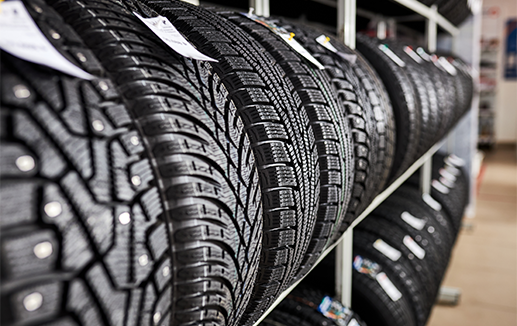
 © alfa27 stock.adobe.com
A consortium of tyre manufacturers has told California’s Department of Toxic Substances Control (DTSC) it could take a decade or more to fully assess potential alternatives to 6PPD in tyres and bring them to market.
The message, included in a recent progress report, tempers claims from some chemical suppliers that a ready alternative to the tyre stabiliser is near at hand, and reiterates the theme from many manufacturers that a long path lies ahead in finding a suitable replacement.
The consortium said it has investigated and ruled out several chemicals that companies have touted as available alternatives to 6PPD. "In many cases," the report said, the claims are "misleading" and "not accompanied by supporting data".
In other cases, the consortium has entered non-disclosure agreements (NDAs) to collect more information, the report said.
The DTSC designated 6PPD in motor vehicle tyres as a priority product under the state’s Safer Consumer Products (SCP) scheme in 2023, after evidence suggested that 6PPD from tyres could degrade into 6PPD-quinone (6PPD-q), a compound that can be toxic to certain aquatic life.
The consortium of tyre makers initially identified several potential 6PPD substitutes in a preliminary alternatives analysis (AA) report completed in 2024.
A stage 2 analysis was originally due by August this year, but the DTSC granted the industry group a three-year extension, pushing the deadline to complete the full AA to 1 October 2029.
Under California’s SCP programme, manufacturers of designated priority products must conduct an AA to identify potential alternatives or stop selling products containing the listed chemical. After the AA is completed, the DTSC then evaluates the analysis to determine if any regulatory response is needed.
However, in its 28 September progress report, the consortium said the state’s deadline "is still shorter than the time frame required" to determine whether an alternative to 6PPD "can be safely used in commercially produced tyres".
So far, the consortium said it has eliminated 38 potential alternatives and has narrowed its search to 39 candidates, thanks in part to collaboration with state regulators and chemical manufacturers.
Even so, it will likely be more than a decade before a replacement for 6PPD hits the US market, according to the consortium’s timeline.
It "can take a minimum of 4 to 6.5 years" to complete research and development, performance testing and tyre design when using an identified chemistry that is readily available, the consortium said in its report. "For potential 6PPD alternatives, an additional 4 years (minimum) of limited-scale field testing would be required to ensure ozone performance as the tyre ages," it said.
Looming PPD regulation in the US and internationally could cause further delays, the group said.
Research collaboration
Meanwhile, tyre manufacturers, chemical developers and regulators are collaborating to accelerate research into 6PPD alternatives.
Three state agencies – California’s DTSC, Washington’s Department of Ecology (Ecology) and Oregon’s Department of Environmental Quality (DEQ) – have signed a memorandum of understanding (MOU) that eases communication about 6PPD among regulators.
Ecology told Chemical Watch News & Insight that as part of the MOU, "participants share timely information about 6PPD research" and "collaborate on some projects", including 6PPD alternatives forums.
The department also said it has "data confidentiality agreements with three companies that have shared helpful information" about new chemical alternatives.
Meanwhile, chemical developers and tyre manufacturers are also collaborating on research.
Neil Smith, chief technology officer at Flexsys, said the company is "working with a select group of leading tyre manufacturers to obtain application-specific input". Early collaboration provides "greater confidence that the candidate will have commercial viability," Smith said.
But not all collaboration between tyre manufacturers and chemical developers has been fruitful.
The consortium’s report said in some cases, chemical suppliers have distracted the alternatives assessment with "inadequately documented" claims about ready 6PPD alternatives.
"In at least one instance," the group said, "a supplier later indicated that the product was no longer promoted for tire applications."
The consortium’s status report said that "evaluating and following up on these claims requires additional effort, which can affect testing priorities and schedule".
Looming regulation
Multiple jurisdictions have proposed PPD regulation that could further complicate the search for an alternative to 6PPD in tyres.
The Netherlands and Austria, for example, have submitted an intention to the European Chemicals Agency (ECHA) to restrict certain PPDs and PDs. California has also listed PPD derivatives as candidate chemicals under the SCP programme.
Meanwhile, the US EPA said it is "still collecting and evaluating information" related to a possible 6PPD rulemaking under TSCA.
The tyre consortium said this regulatory uncertainty complicates its alternatives analysis, since it is "not practical to transition to an interim solution in one jurisdiction while waiting for regulations to develop in another."
Washington State’s own 6PPD alternatives assessment is expected in December.